Easter Ham … with a Dry Creek Valley Zinfandel

Pairing:  Baked Ham Paired with 2012 Dutcher Crossing Proprietor’s Reserve Zinfandel (Dry Creek Valley)

Food:  If you are a regular reader of this blog, you know that our family is big on traditions when it comes to food. So, every Easter, we celebrate the day with friends and the traditional Easter meal of our family … baked ham, pineapple, popovers, potatoes gratin Dauphinois, asparagus, and lemon meringue pie. Served … always … with Zinfandel. Each person has a favorite part of this holiday meal … some say it’s the ham centerpiece with the mustard and brown sugar-crusted topping … others can’t get enough of the over-the-top gratin Dauphinois with it’s thinly-sliced potatoes baked in a cream, butter, and Gruyère cheese sauce. For me, though, it wouldn’t be Easter without  our giant, puffed up 6-inch popovers. My … oh my!

Easter Dinner with Zin

Wine:  Although Pinot Noir is the most widely recognized pairing for baked ham, we have found that the slight sweetness and spicy flavors of Zinfandel is a perfect foil to the salty ham with its mustard/ brown sugar topping. Although Zinfandel traces its origins back to Croatia and is the same grape used to make Primitivo wine in Italy, the vast majority of Zinfandel in the world today is grown in California. And in California, many are convinced that the best Zinfandel comes from the Sonoma region. Our favorite Zinfandel  is produced in the beautiful Dry Creek Valley area of Sonoma. This Zinfandel made by Dutcher Crossing is blended with a bit (13%) of Petite Sirah.

Dutcher Crossing Zin 2012

Tasting Notes: One really gets the spices of mace, allspice and vanilla notes on both the nose and the palate. The flavors of blackberry jam and leather also emerge along with some earthiness resulting from the inclusion of a little Petite Sirah in the blend. And there’s just enough fine tannins to result in good balance in the wine so as not to be too “fruity”. This is yet another example of a wine that goes well with several elements of the meal … the salty/ sweet ham, the cheesy potatoes and the buttery popovers in particular. Even, surprisingly, the pineapple soaked in kirschwasser.

Other Wines That Pair Well with Baked Ham:  Pinot Noir, Beaujolais, Riesling, Rose (Dry), Sparkling Wine

Other Food That Pairs Well with Zinfandel:  Barbecued Meats and Chicken, Cheeseburgers (with Blue Cheese), Duck, Lamb, Mushrooms, Pizza, Turkey

Read About:  http://www.thewinecellarinsider.com/wine-topics/wine-educational-questions/grapes-for-wine-making-flavor-characteristics-explained/zinfandel-wine-grapes-flavor-character-history/

A Source:  http://www.dutchercrossingwinery.com

Greek Moussaka … with a Lebanese Red Wine

Pairing: Greek Moussaka Paired with 2009 Chateau Musar “Hochar Père et Fils” Red Blend Bekaa Valley

Food:  Our Greek Moussaka is based on recipes found in cookbooks from the 60’s and 70’s, Foods of the World: Middle Eastern Cooking and The Four Seasons Cookbook. It is made with layers of cooked sliced eggplant, cooked ground lamb, tomato sauce, onion, garlic, oregano, and cinnamon. Assemble in a casserole dish and top with a white sauce made with milk, butter, egg, and grated mozzarella and feta cheese. Bake at 400F for 15 minutes until brown on top. The internet has lots of recipes if you don’t have access to either of these cookbooks.

Mousaka with Hockar Wine

Wine:  Lebanon is one of the oldest wine growing regions in the world. The ancestors of the Hochar family settled in the high elevation Bekaa Valley (1000 m elevation) long ago … in the 12th Century. Viniculture in this region dates back a bit further … about 5,000 years! The Hochar Père et Fils combines Cinsault (50%), Grenache (30%), Cabernet Sauvignon (10%), and Carignan (10%) to create an exceptional red blend of familiar grapes but with a decidedly different taste … probably due to the unusual inclusion of Cabernet Sauvignon into a blend most associated with the Southern Rhone region of France (i.e., Côte du Rhône). The current vineyard that the Hochar family tends is over 60 years old. It is inspiring that significant winemaking has endured in this war torn nation.

Hochar Lebanese Red Wine

Tasting Notes:  What a terrific wine! Complex aromas of earth, smoke, blackcurrant, blackberry, and blueberry. And flavors of fresh earth, leather, hedgerow jam, plum, dates, and wonderful dried figs. Wow! A terrific, big, mouth-filling red wine that complements beautifully the lamb, cheeses, eggplant, oregano, and cinnamon of the moussaka.

Other Foods That Pair Well with the Hochar Red:  Roast Lamb, Eggplant Dishes, Game, Root Vegetable Stews, Ratatouille

Other Wines That Pair Well with Moussaka:  Rioja (Spain), Chianti (Italy), Côte du Rhône (France), Greek Wines (e.g., Roditys, Nemea)

Read About:  https://en.wikipedia.org/wiki/Lebanese_wine

A Source:  www.klwines.com

Pizza … Paired with a Spanish Jumilla

Pairing:  Napoletana Pizza Paired with a 2011 Bodegas el Nido “Clio” Jumilla

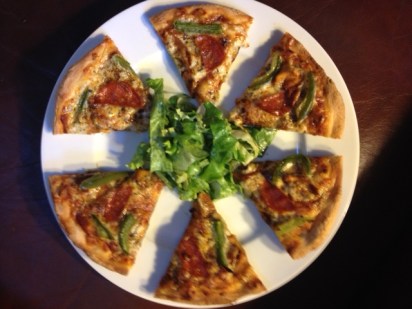
Food:  Homemade pizza is a staple in our household … we have it almost every Saturday night. So you will see pizza on this blog a few times a year, but the pizza will have different toppings, sometimes made with different crusts, and paired with a variety of wines. The crust for this particular pizza (and the one we use most frequently) is from Peter Reinhart’s wonderful cookbook American Pie: My Search for the Perfect Pizza. It is his recipe for Napoletana Pizza Dough made with no oil or sugar, only all-purpose flour, salt, yeast, and cool water. My wife makes one recipe’s worth of dough, enough for six personal size pizza (about 8 to 10 inches each), rolls up 6 balls of the dough, two for that night’s dinner and freezes the four remaining balls for use on the following two Saturdays.  The topping is just a simple tomato sauce, mozzarella cheese, Italian herbs, pepperoni, and green peppers. I like a generous shake of red pepper flakes with mine. Close your eyes … you’re in Naples!

Pizza with Spanish Red

Wine:  So … I know what you’re thinking … pair this pizza with a nice Italian red wine. Barbara, Chianti Classico, Montepulciano d’Abruzzo … all great choices. But let’s get a little adventuresome. We’ll leave Italy and and seek out something promising in nearby Spain. The “Clio” is a big, powerful wine made from 70% Monastrell (Mourvèdre) grapes and 30% Cabernet Sauvignon grown in the Jumilla wine region, a small region on the Mediterranean coast of southeastern Spain.

Clio Jumilla Spain

Tasting Notes:  A deep, almost black, cherry red in color. A word that comes to mind in describing its look is “brooding”. The aromas don’t disappoint … bold black cherry, leather and earth.  The flavors carry that same theme of earthiness, leather and jam, with a touch of cedar and expresso. Though clearly a bold-flavored wine, it has a surprising element of lightness to it. Really works well with the tomato, pepperoni and green pepper of the pizza. Wow!

Other Food That Pairs Well with This “Clio”:  Pasta with Meat Sauce, Sausage, Cheeseburgers (especially with Blue Cheese), Osso Bucco

Other Wines That Pair Well with This Pizza:  (since we’ve already identified some great Italian wines, let’s continue our travels outside Italy) Côte du Rhône (France), Merlot (California), Malbec (Argentina), Shiraz (Australia)

Read About:  http://www.wine-searcher.com/regions-jumilla

A Source:  www.klwines.com

A Lord of the Rings Celebration … with Sam’s Rabbit Stew

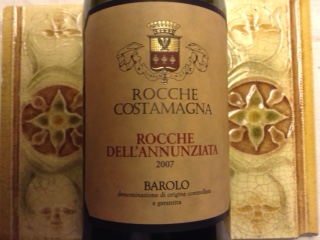
Pairing:  Samwise Gamgee’s Rabbit Stew paired with 2007 Barolo Rocche Costamagna Rocche dell-Annunziata

Background:  March 25 is a day of very special significance in the history of Middle Earth. It is the day the One Ring is destroyed in the fires of Mount Doom as told by J.R.R. Tolkien in his epic literary masterpiece, The Lord of the Rings (LOTR). This is a special book to our entire family … we’ve each read it multiple times, individually and together as a family.  So, we celebrate the book every year on this most important day in Middle Earth, March 25. We celebrate it by creating a meal composed of foods described in various parts of the story.

Lord of the Rings Books

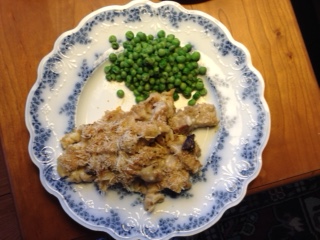
Food:  This is a meal that Samwise Gamgee made for his master, Frodo Baggins, in Ithilien on the border of the Dark Lord’s fortress lands of Mordor. Their guide (and sympathetic villain), Gollum, has brought Sam a couple of freshly killed “conies” and Sam asks if he might go find him some “taters” for the stew. “What’s taters, precious?” is Gollum’s response. Sam never gets his taters, but we’ve added them to our stewing rabbit, along with some simple seasoning (salt, pepper, crushed herbs). Sam would be pleased. Sam and Frodo carried dried fruit and elvish honey cakes called “lembas” on their perilous journey to Mordor, so we’ve added them to the meal. Our version of lembas is a recipe for Lebkuchen that we make at Christmastime. We save out some of the cookies, unglazed, then freeze for eating at our LOTR meal.

LOTR Rabbit Stew

Wine:  Sam and Frodo didn’t drink any wine with this meal, but surely would have enjoyed this extraordinary Barolo to complement the rabbit and dried fruit. Barolo is a prized red wine made from the Nebbiolo grape grown in the Piedmont wine region of northwestern Italy. Some would say that this picturesque Piedmont area of Italy, surrounded on three sides by the Alps, is home to the finest wines and cuisine in all of Italy. And Barolo is the king of wines.

Barolo LOTR

Tasting Notes:  This pale ruby, almost transparent, red wine has a bouquet of red cherry, blueberry, and a hint of fig, combined with some more assertive tobacco and leather aromas. The palate wonderfully balances pleasant tannins with wild cherry, blueberry and leather. The wild cherry lingers on the long, long finish. A perfect complement to the simple flavors of the rabbit and dried fruits (apples, apricots, and cherries), and even the honey cakes. Very special.

Other Foods That Pair Well with This Barolo:  Truffles (or dishes made with truffle oil), Game (e.g., Venison), Beef (Braised or Stewed), Lamb Shanks, Mushroom Risotto.

Other Wines That Pair Well with Rabbit Stew:  Barbaresco, Bandol, Pinot Grig (Alsace) Chateauneuf-du-Pape (white or red).

Read About:  http://www.wine-searcher.com/regions-barolo

A Source:  www.wine.com

Shrimp Arrabbiata … Paired with a Beautiful Verdicchio

Pairing:  Shrimp Arrabbiata Paired with 2012 Monasesca Verdicchio di Materica Riserva

Food:  This recipe is adapted from Artist’s Arrabbiata with the addition of shrimp to this light, but spicy, tomato pasta. Arrabbiata means “angry” in Italian, or spicy when describing this dish. Pancetta, garlic, red pepper flakes, and Romano cheese … all classic ingredients that contribute to the spiciness. But, the shrimp cools down the heat a bit.

Shrimp Arrabbiata

Wine:  Red or white? This is often a relatively easy question to answer when selecting a wine to pair with a meal. Most seafood or vegetable dishes pair best with a white wine, while meat or pasta in a rich tomato sauce go nicely with a red wine. And some foods (eg., roast chicken or pork) go well with either a red or a white. Obviously, there are many exceptions to these generalizations, but you usually can’t go wrong with these pairings. However … what do you do with a dish like this shrimp arrabbiata that combines delicately flavored shrimp and a more assertive tomato sauce with pasta? One could overpower the shrimp with a red wine or overwhelm a white wine with a rich tomato sauce. This was my dilemma when considering a food/wine pairing for this dish. The tomato sauce is not really made with a long, slow cooking that would intensify the tomato flavor. Rather this recipe calls for a low simmer for only about 15 minutes. This results in a lighter, fresher tomato taste which suits both the delicate shrimp and a pairing with a crisp, flavorful Italian white … Verdicchio. Perfecto!

Verdicchio Di MatelicaJPG

Tasting Notes:  Ah … the wonderful fragrance of honeysuckle in full bloom … light and sweet smelling. Along with the intoxicating aroma of fresh, ripe cantaloupe. That sweet cantaloupe taste fills your mouth with a wonderful counterpoint to the spicy tomato sauce as well as a lovely complement to the shrimp. There’s even a hint of clementine on the finish. A delightful wine and a nice pairing for this shrimp arrabbiata.

Other Foods That Pair Well with Verdicchio:  Grilled Seafood, Pasta with a Creamy Sauce, White Fish, Scallops

Other Wines That Pair Well with Shrimp:  Sauvignon Blanc (New Zealand), Chardonnay (Italian), Chablis, Dry Riesling (Alsace)

Read About:  http://www.wine-searcher.com/regions-verdicchio+di+matelica

A Source:   www.klwines.com

Mom’s Tuna Casserole … Dressed Up with Fresh Ingredients and White Burgundy

Pairing:  Tuna Casserole (version 2.0) paired with a 2011 Jacques Bavard Saint-Romain

Food:  Growing up in the 50’s and 60’s, I remember a staple of Friday night dinners was tuna casserole. Garrison Keillor’s stories are laced with anecdotes about bringing tuna casseroles to church suppers. The formula for making it usually consists of a can of concentrated Cream of Mushroom soup (Campbell’s of course), a couple of cans of tuna, a generous Tbs or 2 of Old Bay Seasoning, some form of cooked noodles or pasta, and a heavy dusting of fine bread crumbs and grated cheese. Assembled and baked at 400F until golden brown and bubbling on the edges. Still a fine, tasty and quick meal.  Version 2.0 takes it up a few notches and takes a little longer to prepare. Instead of the canned soup, make a simple béchamel sauce and combine it was sautéed, sliced fresh mushrooms. In place of the canned tuna, take a fresh tuna steak (about 6 oz.), cube it (1/2 in. cubes), pan sear the cubes, and mix it into the sauce with the Old Bay Seasoning and noodles. Some crumbs and parmesan cheese topping. Bake until golden and bubbly on edges. Viola!

Tuna Casserole

Wine:  It is fair to say that the word, Burgundy, is probably one of the most widely known wine terms in the world of wine. Yet, only the hearts of true oenophiles skip a beat when thoughts turn to Burgundy. This relatively small wine region in east-central France is where arguably the world’s finest, most exclusive wines are made (though vintners in Bordeaux may take exception to that claim). One often hears of the extraordinary (and expensive) wines of the Cote de Beaune sub-region of Burgundy where one finds some of the rarest and best white wines on the planet. These wines often have the word Montrachet as part of their name. However, there are some quiet backwaters tucked into the remote hills and valleys of this area that produce some very flavorful Chardonnays (all whites in Burgundy are Chardonnays) at very reasonable prices. Saint-Romain is one of these places.  A charming place we were lucky enough to stay in for a few days during our first visit to Burgundy.

Saint-Romain

Tasting Notes:  The bouquet of this pale gold wine is of apple blossoms, green apples and hints of citrus. On the palate one gets Granny Smith apples and honeysuckle. A very pleasant, drinkable white wine by itself or as an accompaniment to food. Flavors are a nice complement to the tuna, mushrooms and the mace and nutmeg added to the béchamel sauce. A real treat.

Other Food That Pairs Well with Saint Romain:  White Fish (Grilled, Roasted), Roast Chicken,  Oysters, Lobster, Trout

Other Wines That Pair Well with Tuna Casserole:  Unoaked Chardonnay, Beaujolais, Pinot Noir,  Sauvignon Blanc (New Zealand or California), Dry Riesling (Australia)

Read About:  http://winefolly.com/review/white-burgundy-tasting-pairing-and-french-chardonnay/

A Source:  www.klwines.com

Leftover Pheasant … with a Shiraz from Western Australia

Pairing:  Pheasant and Wild Mushrooms paired with 2011 Frankland Estate Rocky Gully Shiraz

Food:  It’s nearing the dining time. Well … time to dive into the freezer to see what delectable leftovers we can uncover. Ah … some leftover roast pheasant (doesn’t everyone have that buried in their freezer?) and a bag of assorted wild mushrooms gathered late last summer  (chanterelles, fairy ring mushrooms, meadow mushrooms). Yum … surely there is something to be done with such special ingredients. Sauté the thawed, partially cooked mushrooms in some butter, add a little red wine (the wine we are drinking, of course) and brown stock/ sauce/ gravy. Cook down until the desired consistency. Warm the boneless pieces of the pheasant in the sauce, season with salt and pepper, and pour it all over some noodles. Perfect!  Wine?  Hmmm …

Leftover Pheasant over Noodles

Wine:  When we think of Shiraz, our thoughts frequently go to Australia … often to the Barossa Valley region of South Australia. But … not today. We’re going to travel further west on that beautiful continent, about a thousand miles, to the appropriately named Western Australia. Those clever Aussies! Clever indeed to grow their beloved Shiraz grapes in a wine region known more for Chardonnay, Cabernet Sauvignon and Riesling. The Frankland Estate winery is located near the Frankland River about 50 miles inland from the ocean, giving a Mediterranean-type climate to the area. The making of their Rocky Gully Shiraz follows the principles born in the Northern Rhone region of France, where winemakers add a teeny bit (about 5%) of white Viognier wine to the red Syrah (what they call Shiraz) to make their renowned Hermitage wine. So, Rocky Gully tastes a lot like Hermitage, but way less inexpensive (about $15).

Rocky Gully Shuraz

Tasting Notes:  You’re standing by the stove making a black currant/ black cherry jam. The kitchen takes on the aromas of the cooking  jam. That’s the nose of this deep, dark reddish-purple wine. Dip a spoon into the cooling jam and taste it. That black currant and black cherry jam is the dominant flavor you get on the palate … along with a touch of pepper. What a nice warm sensation you get in your mouth as you sip this wine. And what a nice lingering finish … delicious!

Other Food that Pairs Well with This Shiraz:  Venison, Duck, Mushrooms, Grilled Sausage, Barbecue Ribs

Other Wine that Pairs Well with Pheasant: Red Bordeaux (Saint-Émilion), Red Burgundy, Pinot Noir (Oregon), Chardonnay (big and oaky from California), Barolo

Read About:  http://www.wine-searcher.com/regions-frankland+river

A Source:  www.wine.com


It’s Mardi Gras … time for a spicy, meaty Jambalaya paired with a cool,crisp SB

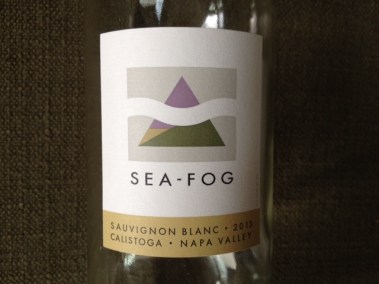
Pairing:  Jambalaya and 2013 Sea Fog Sauvignon Blanc from the Napa Valley

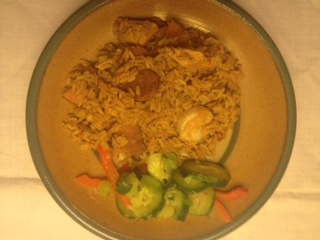
Food:  Mardi Gras in New Orleans is a really big deal … parades, floats, costumes, revelry … and food (and drink!) and lots (excess?) of it! This “Carnival” is celebrated in places throughout the world and held on the day before the start of the liturgical season Lent leading up to Easter. Lent is a time observed, in part, by fasting and denying oneself of favorite foods and beverages. So, Mardi Gras/ Carnival is a last chance to consume such favorites, including meat. Jambalaya is one of the most common food traditions during Mardi Gras. Basically it is rice and vegetables flavored with Cajun spices with one or more meats added to it, usually some combination of chicken, ham, andouille sausage, and shrimp. We use all four (gotta get that meat in before Lent!).

jambalaya

Wine:  When one is talking about the Napa Valley wine region just north of San Francisco Bay, the topic is usually the famed Cabernet Sauvignon. And rightfully so … the Cabs here are often the benchmark for the world’s most popular red wine. But, Napa is a great place for growing other wine grapes. Sauvignon Blanc is one of those varieties that often gets overlooked among the vast expanse of Cabernet Sauvignon vineyards. Sea-Fog Sauvignon Blanc is made by The Grade Cellars in the Calistoga district in the northern part of Napa. Calistoga is noted for, among other things, its hot springs and spas.

sea-fog-sauvignon-blanc

Tasting Notes:  OK … imagine yourself on a breezy day in June, out by the clothesline with the dry sheets billowing in the breeze. Your nose presses up against the sheets as you take them down off the line … and a clean, fresh smell caresses your senses. Nearby, the honeysuckle is in full bloom and you get the lovely honey-scented fragrance of them on the breeze. That’s the best way to describe the nose of this utterly delightful golden yellow wine. The palate extends these clean, crisp qualities added to the gentle flavors of green melon and white flowers. These clean, fresh tastes are a perfect foil to the spicy Jambalaya. Wonderful pairing, but this wine is great, too, all by itself.

Other Wines That Pair Well with Jambalaya:  Pinot Grigio (Italy), Albarino (Spain), Sancerre (France), Chenin Blanc (South Africa)

Other Foods That Pair Well with Sauvignon Blanc:  Fried Chicken, Grilled Shellfish, Raw Oysters, Raw Tomatoes (to name just a few foods that go well with this food-friendly wine)

Read About:  https://napavintners.com

A Source:  www.wine.com

Chicken and Morels paired with a German Pinot Noir

Pairing:  Chicken and Morels paired with a 2012 Burkheimer Winzer Schlossgarten Spätburgunder Rotwein

Food:  This is a fast, simple, but delicious meal to create. Dredge some boneless chicken breasts in some flour seasoned with salt and pepper, dusting off the excess. In some butter, sauté some minced shallot until just slightly browned. Turn up the heat a bit and add the chicken breasts to the pan and sauté until nicely browned and just cooked through. Remove from the pan (keep warm in a low oven), deglaze the pan with a glass of white wine (saving a few swallows for the chef). Reduce the liquid until most has evaporated, then add the halved morels (or any other mushroom you enjoy). Turn the heat down and cook until mushrooms are just done. Add a few Tbs of cream, heat through and adjust for seasoning. Melt a pat of butter and spoon the finished sauce over the chicken and any accompanying rice or pasta.

chicken-and-morels

Wine:  When one thinks of German wine, one immediately thinks white wine … and the white wine is Riesling. Germany produces arguably the finest Rieslings in the world in its famed Mosel wine region. However, Germany also produces some fine red wines, notably Pinot Noir. Baden, located in the southwestern corner of Germany not far from both the French and Swiss borders, is known for its red wines particularly Spätburgunder (Pinot Noir). Pinot Noir is the most widely planted grape in the Baden region and Baden is the third largest wine-growing in all of Germany.

burkheimer-pinot-noir

Tasting Notes:  A pale red, transparent wine, almost the color of a rosé. Aromas of sweet red cherries, with some subtle hints of earth and leather. On the palate, one gets a delicate flavor of cherry cola (yes, this is a desirable trait in many delicious Pinot Noirs). Layers of red cherry and fresh earth are also present. In a blind tasting, I’d guess this wine to be a New Zealand or California pinot due to its prominent flavors of ripe fruit (“fruit forward”). Of course, I’d be wrong! The point is that this German Pinot Noir tastes much more like a New World wine rather than the more nuanced flavors of an Old World wine one might expect from a German wine. The morels in the dish bring out the subtle earthiness in the wine.

Other Wines That Pair Well with This Food: Pinot Noir from New Zealand and California, Chardonnay, Red and White Burgundy.

Other Food That Pairs Well with This Wine: Game, Mushrooms, Roast Turkey, Pork

Read About:  http://www.wine-searcher.com/regions-baden

A Sourcehttp://www.weine-burkheim.de/index.php/rotwein/spatburgunder.html

Remembering Perigord … Drinking Cahors

Pairing:  Périgordian Cuisine and 2011 Clos La Coutale Cahors.

Food: Twenty years ago we were fortunate to celebrate our 25th wedding anniversary in the Périgord region of southwestern France. While there we enjoyed a memorable dinner at a tiny bistro called Chez Tarrade. Arguably one of our best meals ever … multiple courses; delightful chats with Madame, the seventy-year old chef; an unnamed local red wine that went with everything… heavenly. This is our attempt to recreate that amazing dinner. We’ll take it course by course. Then select a wine to go with all of it.

For the first course, Madame served Pâté de Fois Gras with Truffles, accompanied by Pain de Maïs (a baguette made with corn). For our version, we had Chicken Liver Pâté made with chicken livers, onion, garlic, cognac, heavy cream, nutmeg, thyme, salt & pepper.

madame-pate-with-pain-mais

The second course was a cêpe omelette. Madame used fresh cêpe mushrooms. We made our omelette with dried porcini mushrooms.

madame-cepe-omelette

The main course at Madame’s was a simple 1/2 inch thick pan-seared Bistro Steak served with Potatoes Sarlat (Our version consisted of thinly sliced potatoes, each slice dipped in melted duck fat, seasoned with salt, pepper, and garlic. Then stacked the slices in three-layer piles in a heavy saucepan and baked at 450F for about 20 minutes.) For a perfect medium rare steak, cook on a hot grill pan, hum the first verse of The Marseilles, then flip the steak and hum it again. I’m serious. No need for a timer!

madame-bistro-steak-and-potatoes

The steak and potatoes were followed by a simple salad and a plate of assorted cheeses.

And, finally, for dessert we enjoyed homemade Neapolitan Ice Cream (a block of raspberry, pistachio, and chocolate with chocolate chunks).

madame-neopolitan

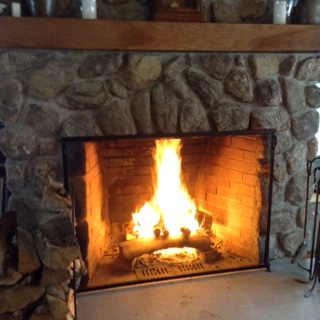
To complete the illusion of dining at Chez Tarrade and capture some of the ambience of this charming bistro, we ate at a table in front of our own fireplace. Very special!

fire-in-fireplace

Wine:  Cahors is a small wine-growing area that surrounds the city of Cahors located on the Lot River in southwestern France a little ways south of the Périgord region. Here, Malbec is by far and away the mostly commonly grown grape. Many people will immediately associate Malbec with Argentina where it is widely planted. However, it is this lovely little corner of France that is the birthplace of Cot which is the original name for Malbec. Wine-making in this locale dates back to Ancient Roman times. This wine from the Clos La Coutale winery is 80% Malbec and 20% Merlot.

cahors

Tasting Notes:  The predominance of Malbec (80%) in this Cahors wine produces an extraordinarily deep dark red, almost black, color. (Note:  Tiny amounts of Malbec are often added to Red Bordeaux wines to darken them.) On the nose, one enjoys blackberry and earth. The palate is a big, robust, complex melding of blackberry fruit leather, tobacco, earth, and hints of licorice and chocolate. The earth notes in particular go beautifully with the pâté, the mushrooms, the beef, and even the chocolate components of the dessert. Amazing how one wine can pair so nicely with a multi-course meal such as this one.

Other Foods That Pair Well with This Wine: Cassoulet, Roast Duck, Duck Confit, Mushrooms, Roast Lamb

Other Wines That Pair Well with This Meal: Bergerac, Red Bordeaux, Tempranillo, Côte du Roussillon

Read About:  http://www.wine-searcher.com/regions-cahors

A Source:  www.klwines.com  or Whole Foods Market